An Architect of Shadows
Conserving Louise Nevelson's Rain Garden Zag IV
When Louise Nevelson’s Rain Garden Zag IV (1978) entered SFMOMA’s collection in 2021, staff were eager to share the masterwork with the public. Made of wood scraps Nevelson gathered from the streets of New York, assembled into a monumental composition over seven feet tall, and spraypainted all black, the work looks tougher than it is. Over decades, areas of paint began lifting, buckling, and flaking, necessitating a yearslong conservation effort before it could be displayed.
Since the work straddles painting and sculpture, the job fell largely to Associate Objects Conservator Natalya Swanson. To better understand the artist and make informed treatment decisions, she conducted extensive research and conversations with Nevelson’s estate, family members, and gallery representatives, as well as with conservation and curatorial colleagues. “I think about conservation as building intimate relationships with objects,” says Swanson, “learning what makes them important, and giving them what they need.”
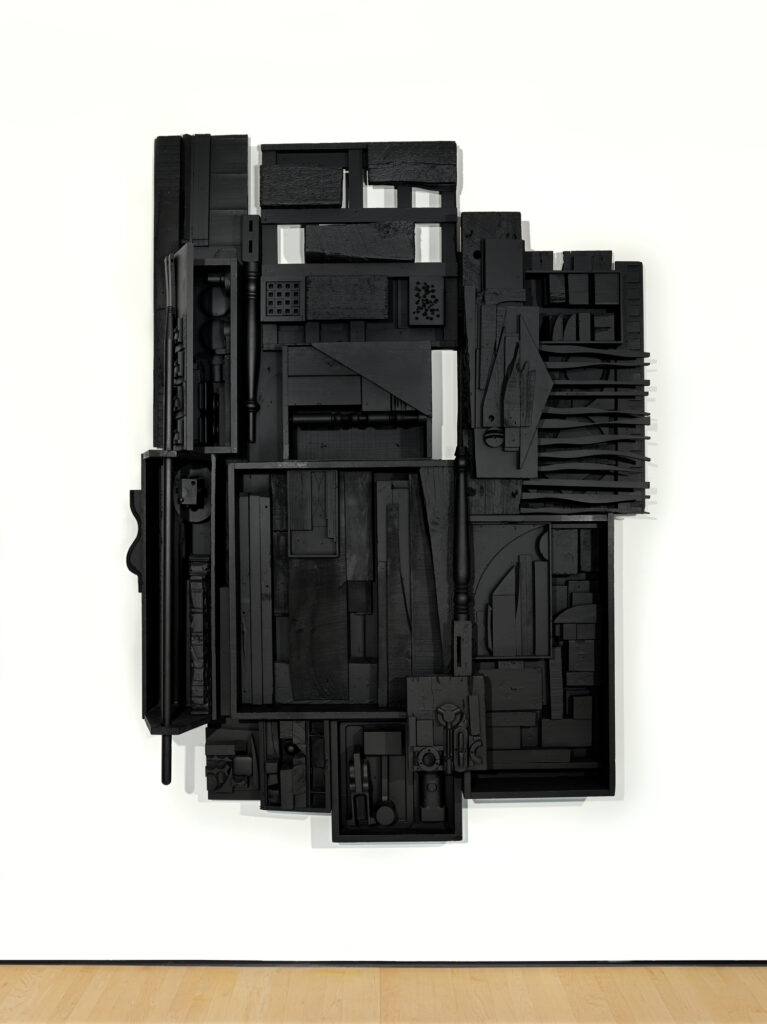
Nevelson (1899–1988), an immigrant from present-day Ukraine, broke ground socially and artistically as a woman artist with a singular vision. She created many all-black assemblages like Rain Garden Zag IV and sanctioned repainting them when necessary, even advising museums and collectors on which type of paint to buy. “She talked about being an architect of shadows,” Swanson states. “She valued a uniformity of surface, and while the materials are important, experiencing the work as a holistic object is paramount. If paint is lifting, it draws attention to a section of the work in a way the artist didn’t intend and detracts from the experience.”
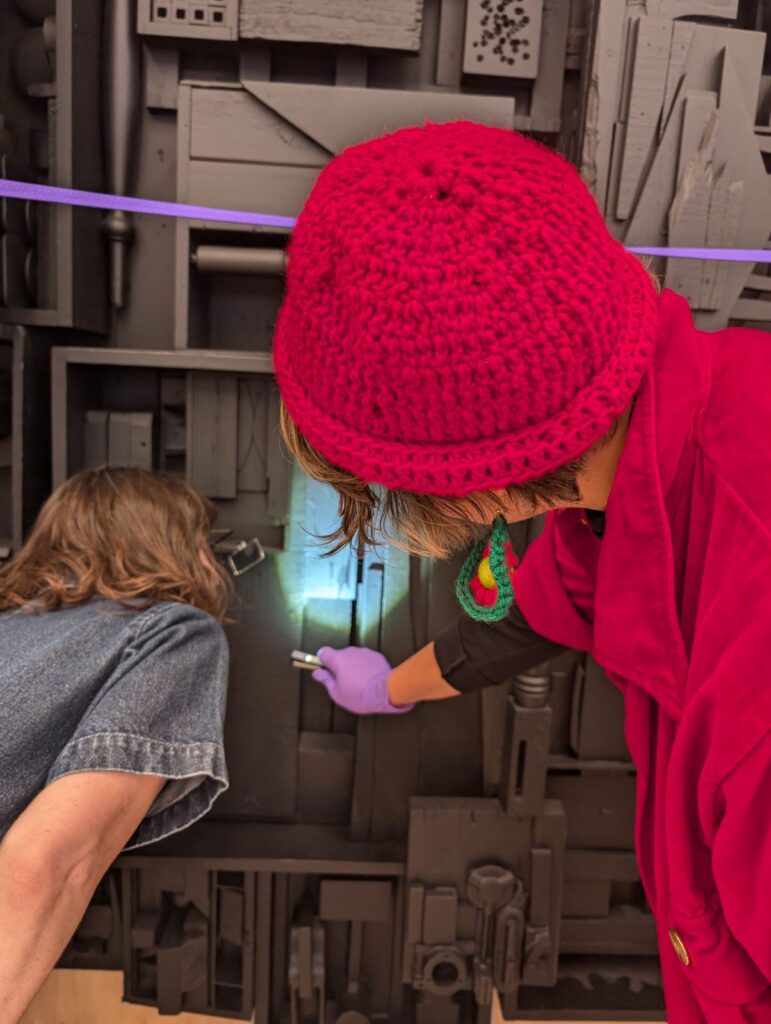
Equipped with this understanding, and in consultation with SFMOMA Paintings Conservator Jennifer Hickey and Fellow in the Conservation of Contemporary Art Chantal Willi, Swanson analyzed the artwork’s physical condition and materials. “Paint was cleaving from the surface only in some areas, and in others it was intact,” she says, likely due to the various ages and types of wood Nevelson used, as well as prior repainting that adhered inconsistently. “For the paint that was already detached, we helped it along. All the paint that was still attached, we left.”
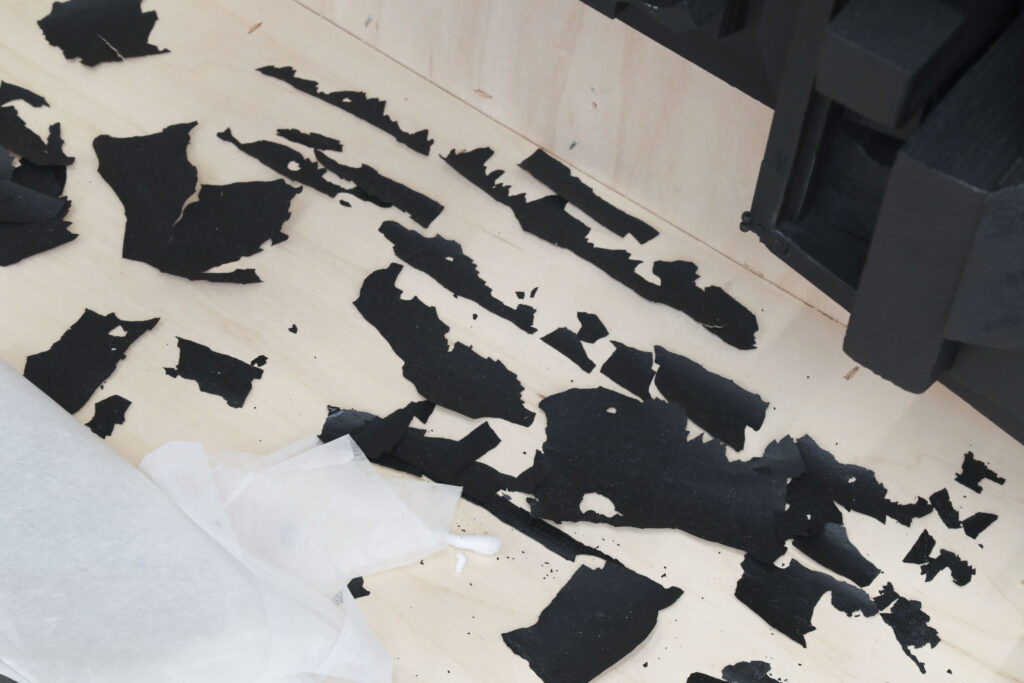
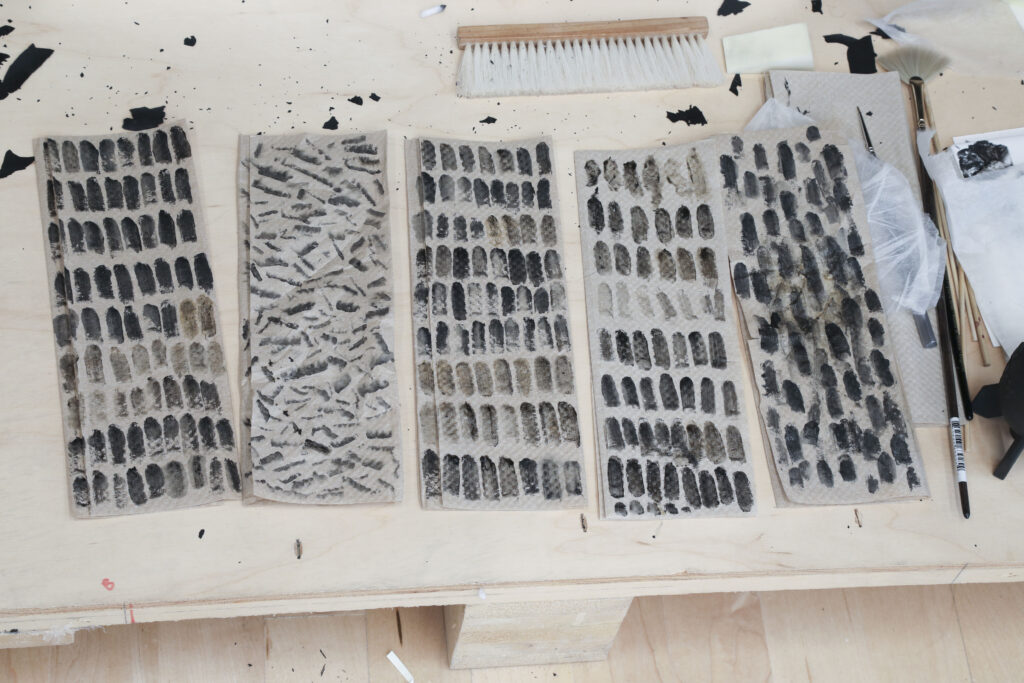
The exact paint Nevelson used is no longer produced, so Swanson and her team created and applied their own water-soluble, plant-derived paint, followed by a clear gloss, to integrate the newly conserved areas of the sculpture. “By using this layered system, we were able to preserve the work’s underlying layer and have it read in a very uniform way,” she explains. And since these substances are easily removable, the treatments can be reversed in the future.
“It’s our job to steward these objects as they move through time, to care for them and maintain them through those changes so current and future visitors can experience the art as the artists intended.”
In January 2025, after years of research and eight months of hands-on labor, Nevelson’s Rain Garden Zag IV was installed in Freeform: Experiencing Abstraction. “I think there is inherent value in preserving her art and telling her story,” Swanson says. “It’s our job to steward these objects as they move through time, to care for them and maintain them through those changes so current and future visitors can experience the art as the artists intended.”