Waste Not
Creating Reusable Museum Walls
Mounting a new museum exhibition often requires a complete gallery renovation — new paint, new lighting, even new walls. This common practice results in beautiful and engaging new displays, but it’s not ideal from a sustainability perspective. Although museums, including SFMOMA, have made moves to reduce their environmental impact in recent years, the waste produced by rotating exhibitions has remained a tough nut to crack.
“There’s a lot of pressure to create innovative experiences that visitors have never seen before,” explains former SFMOMA Design Director Bosco Hernández. “The walls are the biggest, costliest part of exhibitions. To accommodate the artworks and the flow of the galleries, we have to adjust, demolish, and rebuild them.”
A large-scale show can generate up to 200 cubic yards of non-recyclable drywall waste. “A lot of the materials have a lifespan of fifty years,” says Hernández, “but we’re often using them for five or six months.”
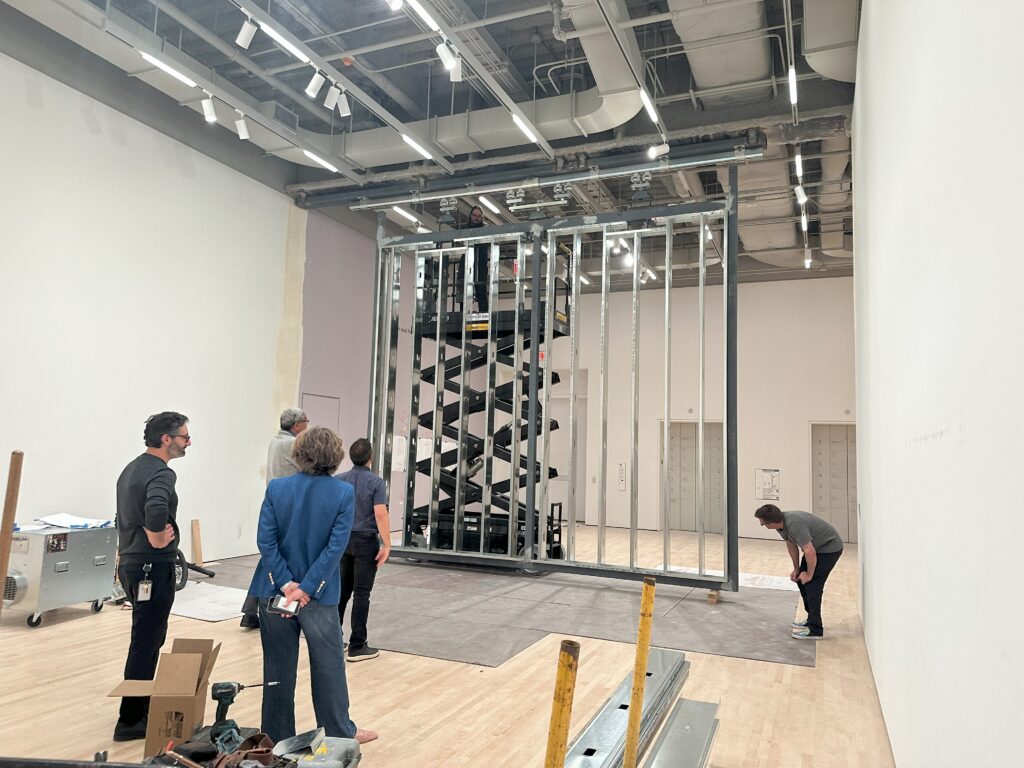
Determined to find a more environmentally and financially sustainable solution, Hernández and Director of Facilities and Operations David Dial spearheaded a three-year effort to develop reusable walls. The long, open floor plan of SFMOMA’s Floor 7 — where many of the museum’s special exhibitions take place — offered a space for experimentation, and a rare gap in exhibitions afforded precious time.
“Money and time were huge constraints,” says Dial. “But the cost savings down the road were fairly evident. As people heard more about it and saw the wall prototype, the project became a priority.” Through a collaborative, creative process, a cross-departmental working group including preparators, curators, exhibition designers, and engineers eventually landed on a solution.
Most preexisting models for reusable walls were unwieldy and too low for SFMOMA’s eighteen-foot gallery ceilings. The group found inspiration in unlikely places: Las Vegas convention centers, which create enclosed spaces using thirty-foot-high movable partitions, and car manufacturers, which move heavy vehicles along assembly lines. In both cases, the solution is overhead: “We thought, what if it were all suspended instead of built up from the ground?” says Dial. “That added a tremendous amount of flexibility.”
The group shifted their focus towards developing and installing an overhead track system, which blends into Floor 7’s exposed ceiling. Sections of wall travel along the tracks like upside-down train cars, hanging on trolleys that pivot to allow horizontal, vertical, and even diagonal orientations. When not in use, they can be stored discreetly along the side walls of the gallery.
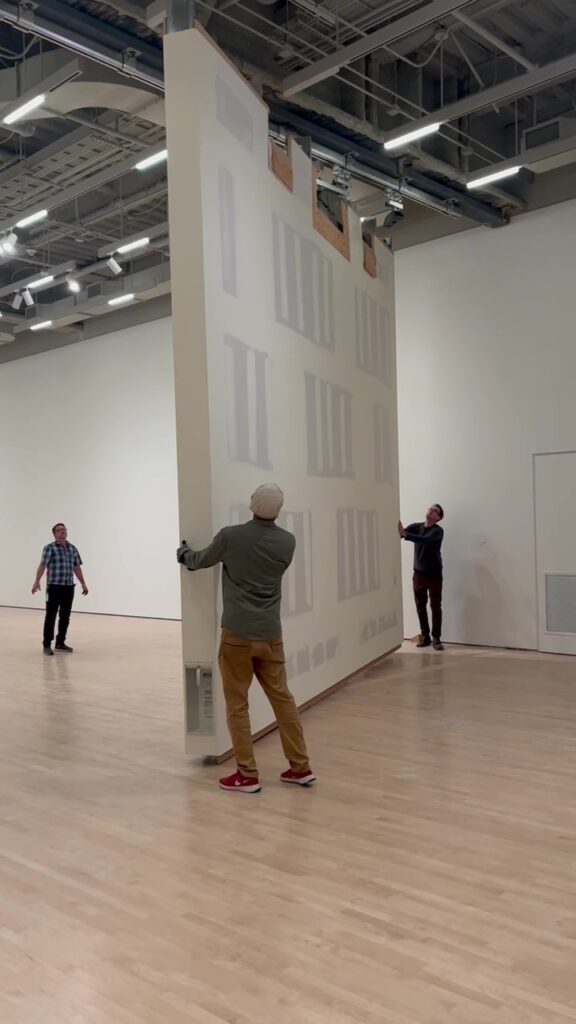
The wall sections are made from steel stud framing and sheet rock and fixed to the floor once placed, meaning they are safe for hanging artwork and visitors won’t notice the difference. “It’s similar to how we’re constructing our walls now, but they don’t need to be destroyed,” says Dial.
SFMOMA has been rolling out the reusable walls gradually, piloting a single wall in the exhibition Wolfgang Tillmans: To look without fear (2023–24), and incorporating six reusable walls into the floor plan of Suzanne Jackson: What Is Love, opening this September. When the project is completed, seven tracks will run the length of the space’s ceiling, enabling all temporary walls on Floor 7 to be reusable.
Reflecting on the project, Hernández sees a lesson in teamwork and creative thinking. “There’s so much talent in the museum,” he says. “We often draw a line between ourselves and the artists, but creativity is at the heart of our work — and we need to embrace it to tackle big, systemic issues like sustainability.”