SFMOMA Debuts Alejandro Cartagena: Ground Rules on November 22
Retrospective Traces Themes Across More Than 20 Series, Including Documentary Images, Collage, Vernacular Photographs and AI-Generated Video
Alejandro Cartagena: Ground Rules
November 22, 2025 – April 19, 2026
Photobook DJ Session: November 20, 2025
Artist Talk: November 22, 2025
SAN FRANCISCO, CA (June 5, 2025, updated November 19, 2025) – The San Francisco Museum of Modern Art (SFMOMA) announces Alejandro Cartagena: Ground Rules, the artist’s first retrospective, on view from November 22, 2025, to April 19, 2026. Over two prolific decades, Cartagena has produced an incredibly varied body of work that reflects on contemporary life in Mexico and its changing landscapes, which have been his home since the age of 13. From color documentary photography to collage, the appropriation of found photographs to Artificial Intelligence (AI)-generated works, Cartagena’s prodigious output is unified by his commitment to addressing Mexico’s most pressing social, economic and environmental issues.
Alejandro Cartagena: Ground Rules explores the artist’s practice as a “project photographer,” highlighting work from over 20 series. For each project, Cartagena conducts extensive research, then establishes a set of creative constraints around elements such as format, subject matter or location to guide him, often amassing hundreds of photographs around a topic. No photograph is more important than another; rather, his work allows meaning to emerge through accumulation, juxtaposition and variation. The exhibition traces recurring concerns across his career for the first time, including land use, the U.S.-Mexico border, climate change, increasing wealth disparities and the effects of rapid suburban sprawl, while also examining how Cartagena uses archival sources, photobooks, large-scale installations and AI to expand what photography can be. Alejandro Cartagena: Ground Rules will be accompanied by an illustrated monograph published by Aperture that charts the artist’s full career, featuring newly commissioned texts.
“Photography changed our world two centuries ago; the way we see it, and the way we think about it has never been the same since we started using it,” said Cartagena. “I want to be part of that history of how the medium transformed our understanding of social, political and environmental issues through images.”
“While Cartagena’s photographs are rooted in his observations of life in Mexico, part of their great power is their ability to open up broad conversations that transcend geography,” said Christopher Bedford, Helen and Charles Schwab Director of SFMOMA. “Cartagena’s work invites reflection and probing questions that serve to complicate our understanding of important social and environmental topics. I believe this exhibition will resonate deeply with our audiences.”
Exhibition Overview
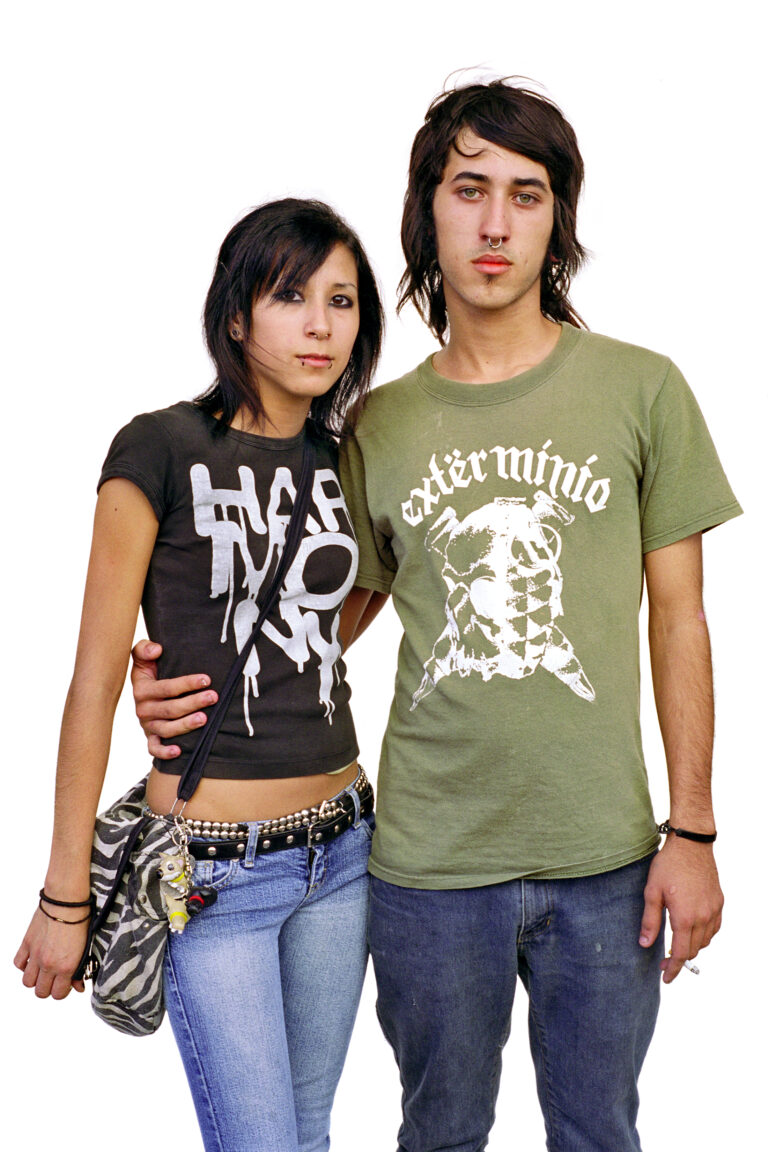
The exhibition opens with Cartagena’s early photographic projects, where many of his central concerns, such as urban life, appropriation, and the U.S.-Mexico border, first come into focus. At the beginning of his career, Cartagena trained his camera on himself and his fellow residents of Nuevo León, Mexico. His first large-scale project, Identidad Nuevo León (2005), was created in collaboration with fellow photographer Rubén Marcos. The two set up a mobile studio with a white backdrop and spent a year photographing 800 people in 25 municipalities in Nuevo León. Each sitter offers a distinct sense of style and presence. Around the same time, for his 2004-05 series Espacios Habitables (Living Spaces), Cartagena returned to his birthplace, the Dominican Republic, and asked passersby to take his portrait as if he were a tourist in front of places from his youth. Blurry and taken from a low camera angle, these images gesture toward reconnecting with the past.
In 2009, Cartagena began a trilogy of projects about the U.S.-Mexico border: Between Borders (2009–10), Americanos (2012–14) and Without Walls (2017). While some photographs portray the physical border itself, the series as a whole explores its broader cultural, economic and psychological impact. Cartagena pushes back against simplistic south-to-north migration narratives and questions the promise of the American dream, depicting the border not only as a territorial divide but as an invisible force shaping lives, perceptions and policies on both sides of this artificial barrier.
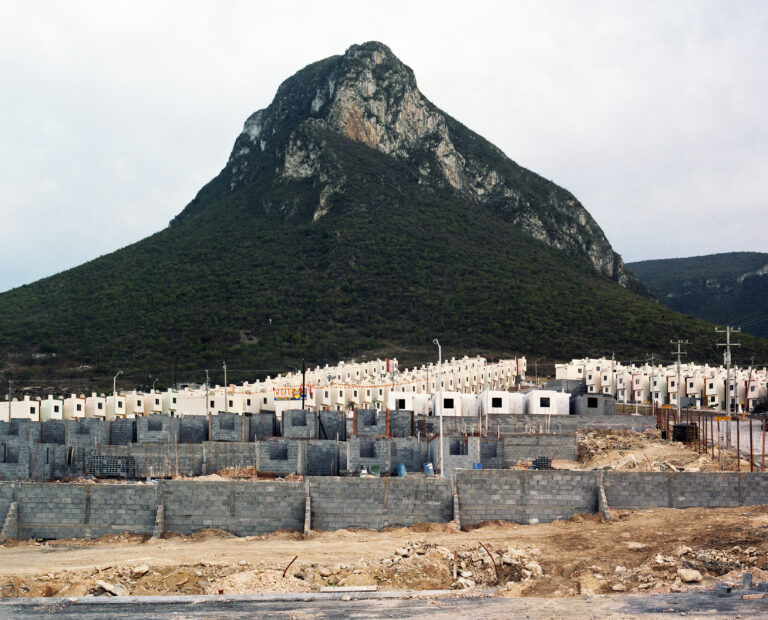
As the exhibition progresses, the environment and issues around land use emerge as central concerns for the artist. In his critically acclaimed, multiyear project Suburbia Mexicana (2005–10), the artist developed five subseries: Fragmented Cities, Lost Rivers, The Other Distance, Urban Wastelands and People of the Suburbs, which examine the complex relationship between urban centers and the suburbs haphazardly built around them. From poignant, sun-drenched landscapes of dried-up riverbeds to portraits in front of undulating rows of identical, box-like houses, Cartagena looks at how growth has altered the landscape and deeply impacted the lives of its residents.
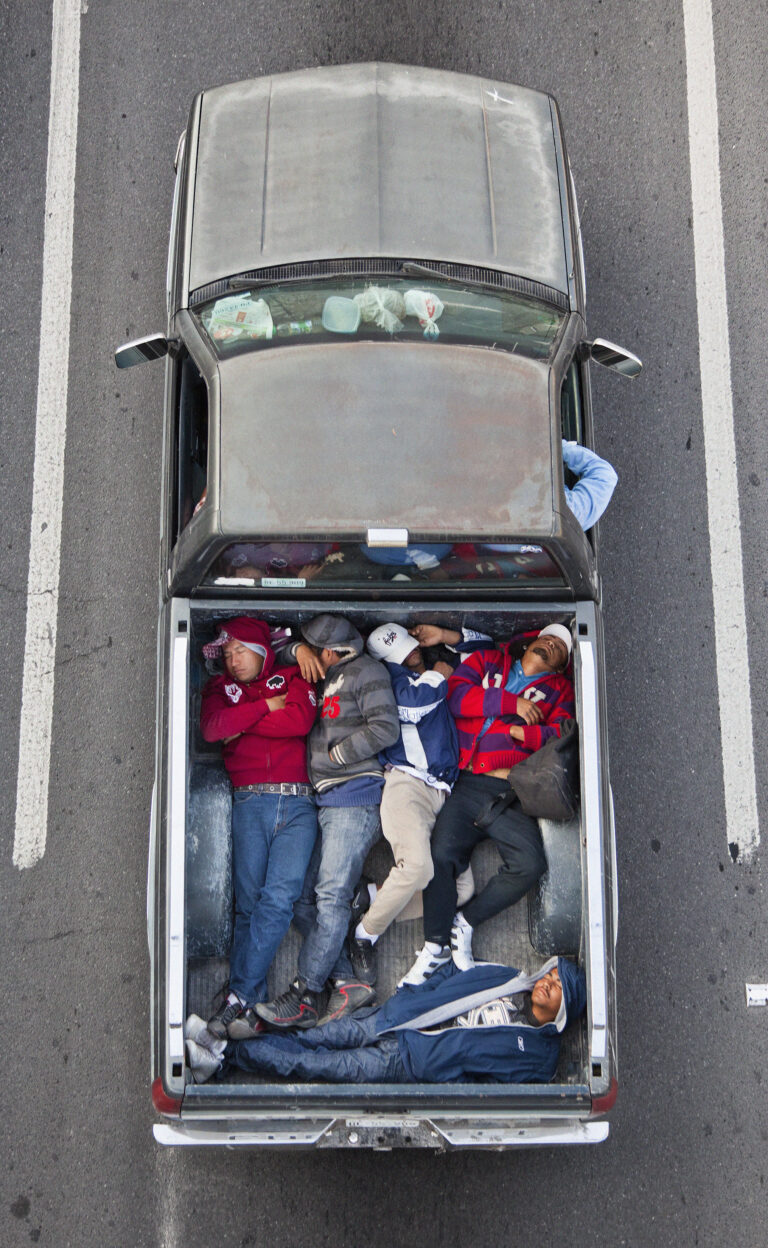
For his popular series Carpoolers (2011–12), Cartagena asked a deceptively simple question: what happens when suburban expansion outpaces public infrastructure? The answer plays out in his depiction of laborers who, without access to a direct bus line, commute in the flatbeds of pickup trucks from their homes in the suburbs to wealthy Mexican enclaves. Standing on a pedestrian overpass for three mornings a week for a year, Cartagena photographed these workers from above. Meanwhile, the series Suburban Bus (2016) addresses similar questions but instead looks at those who do have access to a bus line. Over the course of three days and nights, the artist took the bus nonstop to retrace the route he would take daily between 1993 to 2004 on his way to work at his family’s restaurant in Juárez. Cartagena places the viewer amongst the huddled passengers, some trying to rest as others stand and sway with the motion of the bus. At once breathtakingly beautiful and melancholic, the series captures the exhaustion and solitude of long-distance commuting.
In 2016, Cartagena began experimenting with collage, starting with his own photographs and then moving to small, black-and-white vernacular photographs he gathered at Mexican flea markets and landfills. For his series Photo Structures (2018–19), he carefully excised figures from found pictures, leaving only the background. The resulting images reveal the formal patterns of photographic composition—the repeated poses, angles and backdrops—while also asking what is lost or gained when the ostensible subject disappears.
Continuing to push the limits of photography, Cartagena founded Fellowship in 2021, a platform initially created to share NFT-based photography. The project quickly evolved into a broader space for the distribution, collection and exploration of digital media, including generative art, artificial intelligence and video. The exhibition will include a selection of his NFTs. In his most recent video series, We Are Things (2025), Cartagena revisits his interest in archival imagery through a new lens—using an AI image generator trained on a personal archive. This latest work brings his experimentation full circle, blending the digital with the analog and linking his early collages of found photographs with cutting-edge technology.
The final section of the exhibition showcases Cartagena’s photobooks as central components of his practice. A prolific self-publisher, Cartagena sees the photobook as the natural progression for a project photographer; the editing and sequencing of the work, for him, fundamentally affix meaning to the imagery.
About Alejandro Cartagena
Born in Santo Domingo, Dominican Republic in 1977, Alejandro Cartagena lives and works in Monterrey, Mexico. Over the last two decades, his projects have employed landscape photography and portraiture as a means to examine social, urban and environmental issues. His work has been exhibited at more than 50 group and solo exhibitions, including the Centre de Cultura Contemporània de Barcelona (CCCB) in Barcelona and the Fondation Cartier pour l’Art Contemporain in Paris. His work is held in the permanent collections of the Coppel collection, the FEMSA Collection, the George Eastman House, The J. Paul Getty Museum, The Museum of Contemporary Photography in Chicago, The Museum of Fine Arts in Houston, the Portland Museum of Art, the San Francisco Museum of Modern Art, and the Santa Barbara Museum of Art, and The West Collection.
Cartagena has received several awards including the international Photolucida Critical Mass Book Award, the Street Photography Award in London Photo Festival, the Lente Latino Award in Chile, the Premio IILA-FotoGrafia Award in Rome and the Salon de la Fotografia of Fototeca de Nuevo León in Mexico. He was shortlisted for the Deutsche Börse Photography Foundation Prize in 2021.
Publication
The exhibition will be accompanied by the first comprehensive, fully bilingual publication that charts the entire career of Alejandro Cartagena to date. Published by Aperture, Alejandro Cartagena: Ground Rules features 175 illustrations as well as contributions by Tatiana Bilbao, Álvaro Enrigue, Horacio Fernández, Charlotte Kent and Shana Lopes.
Education and Public Programs
On November 20, 2025, at 6 p.m., Alejandro Cartagena will create a live remix of his expansive collection of photobooks across a dynamic three-channel video installation. This special Photobook DJ Session in the Gina and Stuart Peterson White Box on Floor 4 will celebrate the opening of the artist’s retrospective exhibition Alejandro Cartagena: Ground Rules. The evening will also feature a collaborative image generator project, inviting guests to create their own images from an AI trained on Cartagena’s works on housing in Mexico. In addition, Alejandro Cartagena will participate in an artist talk and book signing on November 22, 2025, at 2 p.m. in the Phyllis Wattis Theater on Floor 1, during which he will discuss the ways his photography and interest in archives help document and expand our understanding of topics like climate change and shifting natural landscapes.
SFMOMA will offer guided tours of the exhibition for high school groups and self-guided tours for all grades. A Teacher Institute for K-12 educators focused on the exhibition will take place on December 6, 2025; for registration information, educators may contact teachers@sfmoma.org. For more educational resources focused on Cartagena’s work, SFMOMA offers an online Open Studio activity written by the artist that encourages students to explore project-based photography and how this kind of image-making can be used to interpret the spaces around us.
Tour Venues + Dates
SFMOMA: November 22, 2025–April 19, 2026
Fundación MAPFRE, Madrid: June 2026–August 2026
Organization
Alejandro Cartagena: Ground Rules is co-organized by the San Francisco Museum of Modern Art and Fundación MAPFRE, Madrid.
The exhibition is curated by Shana Lopes, SFMOMA’s assistant curator of photography, with Alex Landry, SFMOMA’s curatorial assistant, photography.
Support
Major support of Alejandro Cartagena: Ground Rules at SFMOMA is provided by Katie Hall and Tom Knutsen, Kate and Wes Mitchell, and the Pritzker Exhibition Fund in Photography. Significant support is provided by The Black Dog Private Foundation, Jim Breyer, Concepción S. and Irwin Federman, and Nion McEvoy and Leslie Berriman. Meaningful support is provided by the Mary Jane Elmore West Coast Exhibition Fund and Lisa Stone Pritzker Family Fund. This project is carried out with the support of Fundación Jumex Arte Contemporáneo.
San Francisco Museum of Modern Art
151 Third Street
San Francisco, CA 94103
The San Francisco Museum of Modern Art is one of the largest museums of modern and contemporary art in the United States and a thriving cultural center for the Bay Area. Our remarkable collection of painting, sculpture, photography, architecture, design and media arts is housed in a LEED Gold-certified building designed by the global architects Snøhetta and Mario Botta. In addition to our seven gallery floors, SFMOMA offers more than 45,000 square feet of free, art-filled public space open to all.
Visit sfmoma.org or call 415.357.4000 for more information.
Follow us on X for updates and announcements: @SFMOMA_Press
Alejandro Cartagena, Carpoolers #21, from the series Carpoolers, 2011-12; © Alejandro Cartagena, courtesy the artist
Alejandro Cartagena, Fragmented Cities, Escobedo, from the series Suburbia Mexicana, 2005-10; © Alejandro Cartagena, courtesy the artist
Alejandro Cartagena and Rubén Marcos, Identidad Nuevo León #41, from the series Identidad Nuevo León, 2005-6; © Alejandro Cartagena, courtesy the artist